FRUIT GROWING
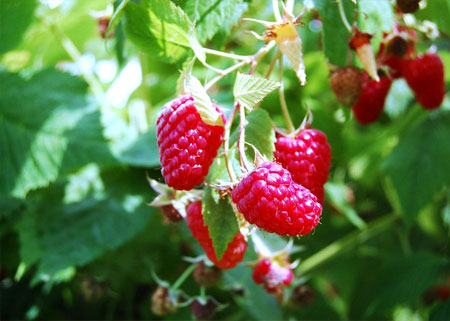
The effectiveness of zeolite is particularly manifested with colored fruits, while watering "drop by drop" or classical watering, because it retains moisture 3-4 times longer than ordinary soil thanks to its porous structure. The water in the winter in the zeolite pores does not freeze even when its goes down to -20°C, which provides resistance to frost-sensitive plants.
For colored fruits it is recommended 200-500 grams of zeolite per pit, while for the other crops even up to 1kg depending on whether is it a temporary plantation or an existing classic crops.
When transplanting new cultures it is important to for the zeolite to be placed on the bottom and around the perimeter of the pit, next to the vessels and covers the ground. For already planted fruit trees zeolite should also be placed around the perimeter of the root by small excavation.
Greater amount of zeolite guarantees a greater success. There are no limitations.
Viticulture
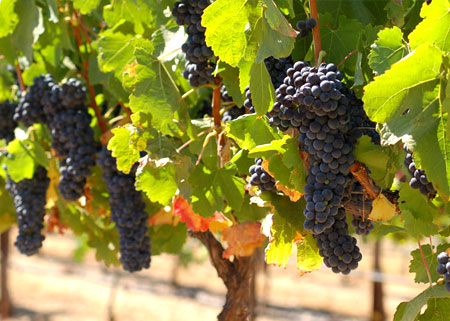
The role of zeolite in viticulture is demonstrated through the production of grapevine grafts, where it contributes to a better reception of coils and obtains a larger number of coils of the first class.
The amount that is added to the furrow is 0.6 kg / m2
It is also used in orchards and a vineyard, which contributes to a better reception, growth and development, as well as that it guarantees more fruit growth in the second year.
It is added in quantities of 0.5 kg per planting area.
It is also used for the routine production of grapes in addition to fertilizer added to the ridges. Optimal amount of zeolite is 0.4 kg / m2. Its application increases the yield and improves the quality of the grapes, which is important to note for the cultivars that produce wine.